Key Takeaways

What changed and how it impacts UX
A faster front door
Gauntlet USD Alpha (gtUSDa) is our flagship vault, built on Aera vault infrastructure. It just got its biggest upgrade yet, and the first thing you feel is speed. Requests now settle about ten times faster than before. So how do you upgrade a vault without interrupting the people using it?
How a vault gets upgraded
A vault built on Aera is composable. It is built from parts, and parts can be upgraded one at a time. The vault itself holds the USDC. Smaller contracts plug into it, each with one job. The Provisioner is the front door, the only way in or out. Deposits and redemptions go through it as requests, and the vault settles those requests. The Price and Fee Calculator works out what each gtUSDa token is redeemable for.
This upgrade replaced both of those parts. In September the Base vault was upgraded to use new Provisioner and Price and Fee Calculator contracts. Upgrading these components requires approval through a multi-sig and a 24-hour timelock, and proposed changes are publicly visible before they can take effect. The vault contract and the gtUSDa token are unchanged; your gtUSDa stayed in your wallet and the USDC stayed in the vault.

What it means today
The wait at the door is shorter. Since the upgrade, the typical request settles in about 6 minutes, down from about an hour. It is still a request-and-settle flow, but the wait is now measured in minutes.
And because Aera vault infrastructure is composable, every app and protocol built on it goes through that same door. If you have integrated gtUSDa, your users got the faster door without having to take any action. If you interact with the contracts directly rather than through the SDK, the one thing to know is that the Provisioner on Base is a new contract.

What is built in
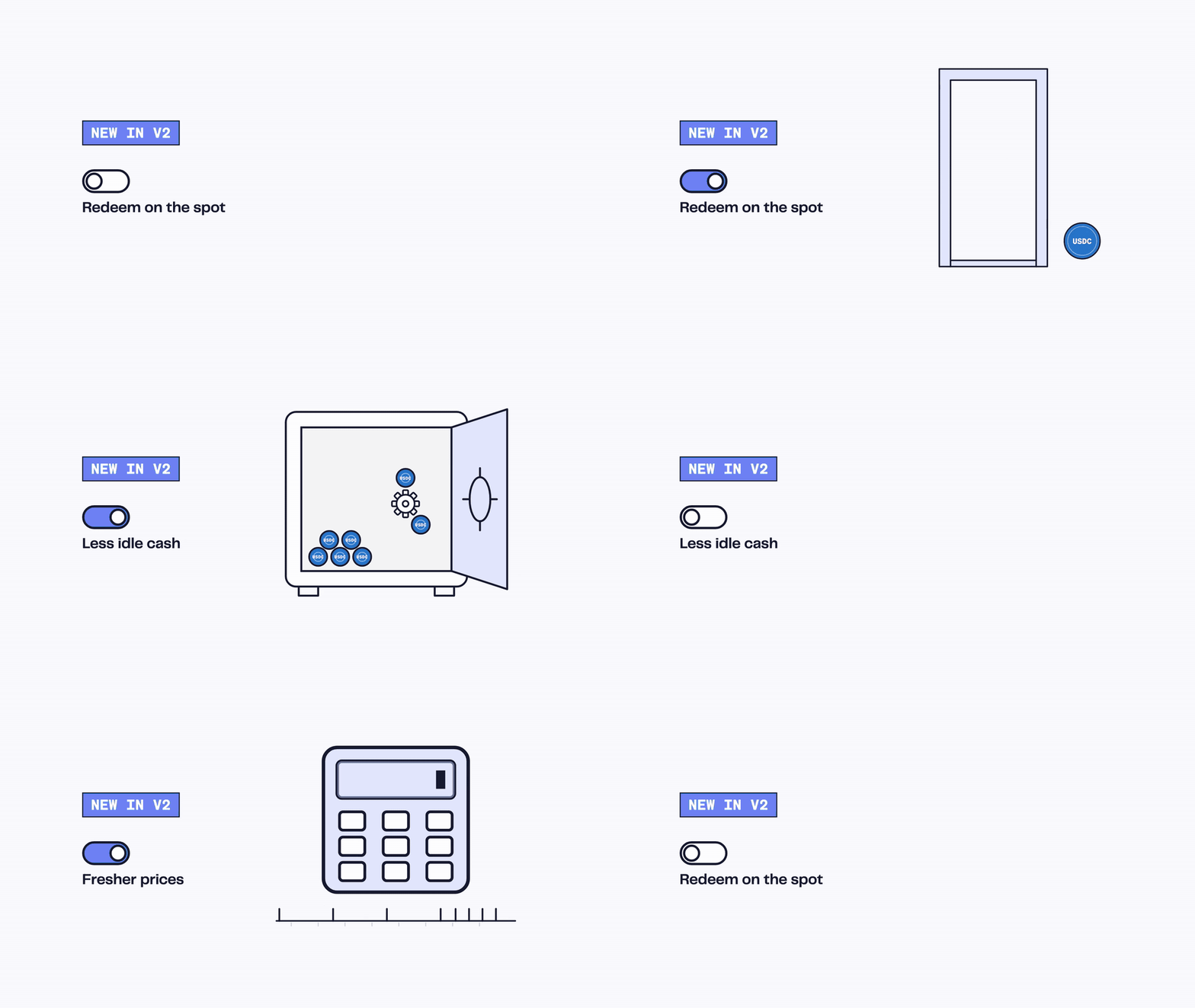
The new Provisioner also shipped with three new features built in.
Redeem on the spot. Instead of sending a request and waiting, you can redeem straight out of the vault's yield positions, up to a cap. Past the cap, your request goes the usual way.
Less idle cash. Because redemptions can now be paid from those positions, the vault doesn't need to keep as much USDC sitting aside for withdrawals. More of it stays at work.
Fresher prices. The token price can be updated more often than before.
Base first
Base was upgraded first. gtUSDa also runs on Ethereum, Arbitrum and Optimism, and the same upgrade will follow on each chain.
That is what a composable vault is all about. The USDC stays where it is, the token stays in your wallet, and the parts around them get better without asking anything of you. For the contract and SDK details, the Developer Kit docs are at docs.gauntlet.xyz.
The products discussed above do not consist of registered securities and have not been reviewed or approved by any regulator. They are not offered as registered futures, swap, or other derivatives offerings, and nothing here should be read as an offer to sell or a solicitation to buy any security or provide any form of advisory services. These services are offered through non-custodial vaults on decentralized finance platforms — users retain full control of their private keys and wallets at all times. Nothing in this marketing material constitutes investment, legal, or tax advice. These products are not deposit instruments and carry no depository or other insurance. Any discussion of yield or performance is prospective and abstract, not guaranteed, and may go to zero — past results don't predict future ones. Users should only participate with full understanding of the risks involved.
Blog
View the full presentation
Read the full paper